This is some text inside of a div block.
Search across the whole Roadsides site


Before the advent of mechanical refrigeration, natural ice harvested from lakes and rivers served as a means of cooling. From the nineteenth century onwards, this frozen commodity was shipped from North America and Norway to colonial tropical regions to satisfy Western desires for comfort and health (Dickason 1991). Recent research has highlighted how imported ice projected Euro-American ideals of purity, hygiene and civility onto non-Western societies, while its consumption as a luxury reinforced class and racial hierarchies (Hobart 2022; Ashutosh 2023; Surland 2025). However, scholarship centered on the ice trade often obscures the role of Indigenous knowledge in shaping transnational encounters during the era of imperial expansion.
In Ningbo, on China’s east coast, a port city opened to foreign trade and residence under the Treaty of Nanking in 1842, visitors and expatriates encountered an abundant and inexpensive supply of ice collected by farmers from their fields. The remarkable number of icehouses lining the riverbanks drew interest from Western and Japanese researchers in botany, geography, architecture and history, who recorded these vernacular landscapes in their travel accounts, which soon reached overseas readerships and served as references for icehouse designs elsewhere (Carlisle 1872: 134–5; von Richthofen 1907: 6–7; Boerschmann 1911: 4; Saeki 1942).
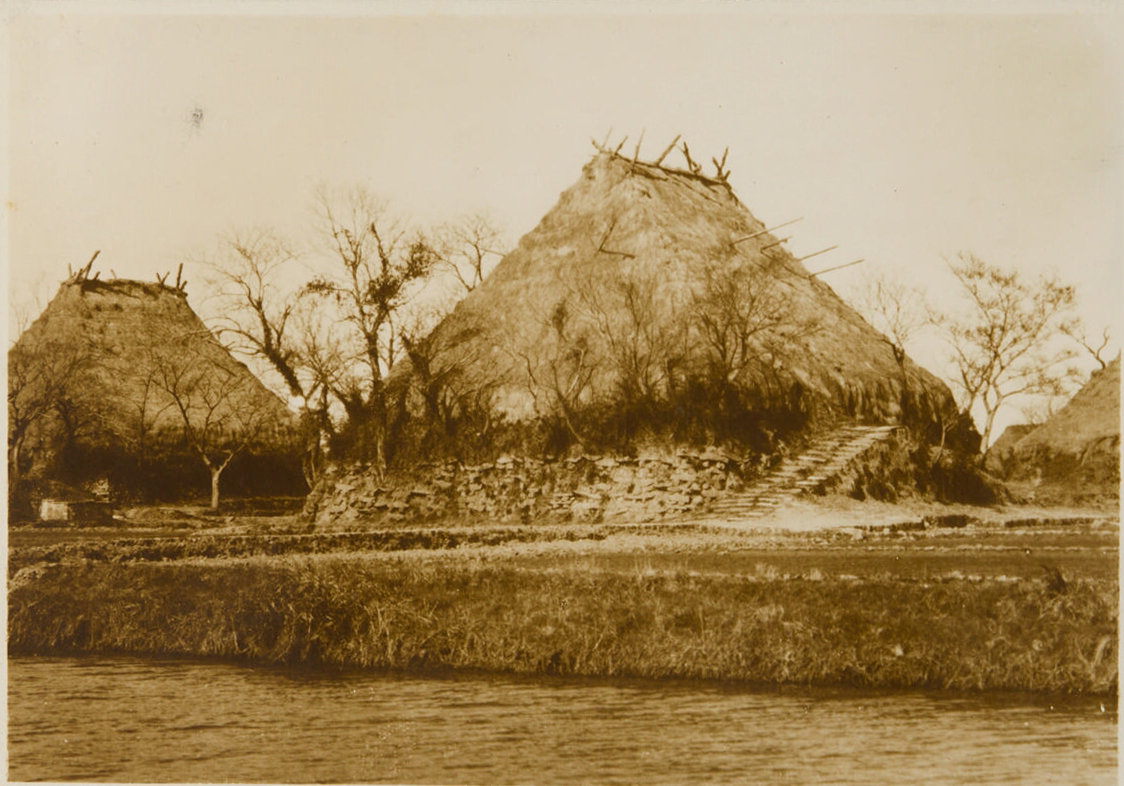
Mass-media coverage, together with models of icehouses displayed in Chinese pavilions at international exhibitions, further captured public fascination. Drawing on archival sources, this paper traces the circulation of these representations and examines how ice-making and storage techniques in Ningbo were documented, interpreted and adopted by foreign observers as practices of knowledge and interest. Rather than reproducing a narrative of colonial domination, it reveals a more interconnected history of the cryosphere, in which locally grounded practices intersected with global networks and environmental imaginaries.
Integrated into the seasonal rhythms of agricultural production, ice harvesting in Ningbo, particularly in Yin County, sustained the thriving fishery industry along the Yong River. In winter—generally considered here to span December to February—farmers flooded shallow paddy fields to freeze water, then stored the ice in pyramid-shaped structures made of mud walls and thatched bamboo roofs. These buildings, over six meters tall, featured a roof-level loading door accessible via a sloped ramp or steps, and a smaller ground-level door for retrieval. In spring, meltwater was channeled through gutters to irrigate nearby crops, while during the summer fishing season starting from May, Ningbo fishermen purchased ice from the icehouses as they set out to sea, using it to preserve their catches.
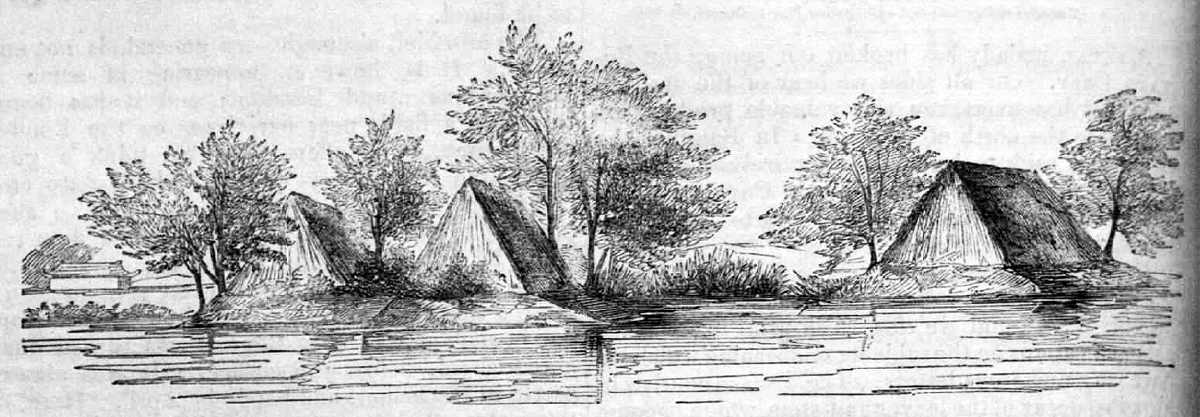
Among the many observations of Ningbo’s icehouse structures, one of the most widely circulated was a letter from Robert Fortune (1845) to Professor John Lindley, co-founder and first editor of The Gardener’s Chronicle, which described the construction methods and included a sketch. Fortune, best known for his plant-collecting expeditions to China commissioned by the Horticultural Society of London, highlighted these vernacular structures—situated on a level plain and fully exposed to the “clear, fierce, and burning” sun (Fortune 1845: 576), far harsher conditions than in England—as models of efficiency and economy. His portrayal remained influential long after its publication and was later cited in Science and Civilisation in China—a landmark series of volumes begun by the late Joseph Needham that challenges Eurocentric understandings of science and technology by foregrounding non-Western contributions—in discussions of Chinese methods of food preservation (Huang 2000: 435–36).
Yet Fortune’s observations went beyond a site-specific record; they resonated with readers in nineteenth-century Britain and the United States, where the rapid expansion of the ice trade had fueled growing interest in effective storage techniques. In Victorian Britain, horticultural journalism flourished as the rising middle class—unlike aristocratic landowners, who valued architectural grandeur—favored practical and economical icehouse designs for their suburban gardens (Beamon and Roaf 1990).[1] Periodicals provided a platform for sharing construction insights, discussing building materials, ventilation, drainage, insulation and site selection, including considerations like the orientation and the shade of trees. One of the most debated questions concerned whether icehouses should be built above ground. The example provided by Fortune sparked responses in later issues and informed similar debates across the Atlantic. While plantation and estate owners generally followed the European preference for subterranean construction, above-ground structures gained popularity for their lower cost, ease of loading and unloading, and improved resistance to dampness and humidity. American agricultural journals and farming magazines cited Fortune’s article in support of such designs, which were implemented at key sites in the ice-harvesting industry.[2]
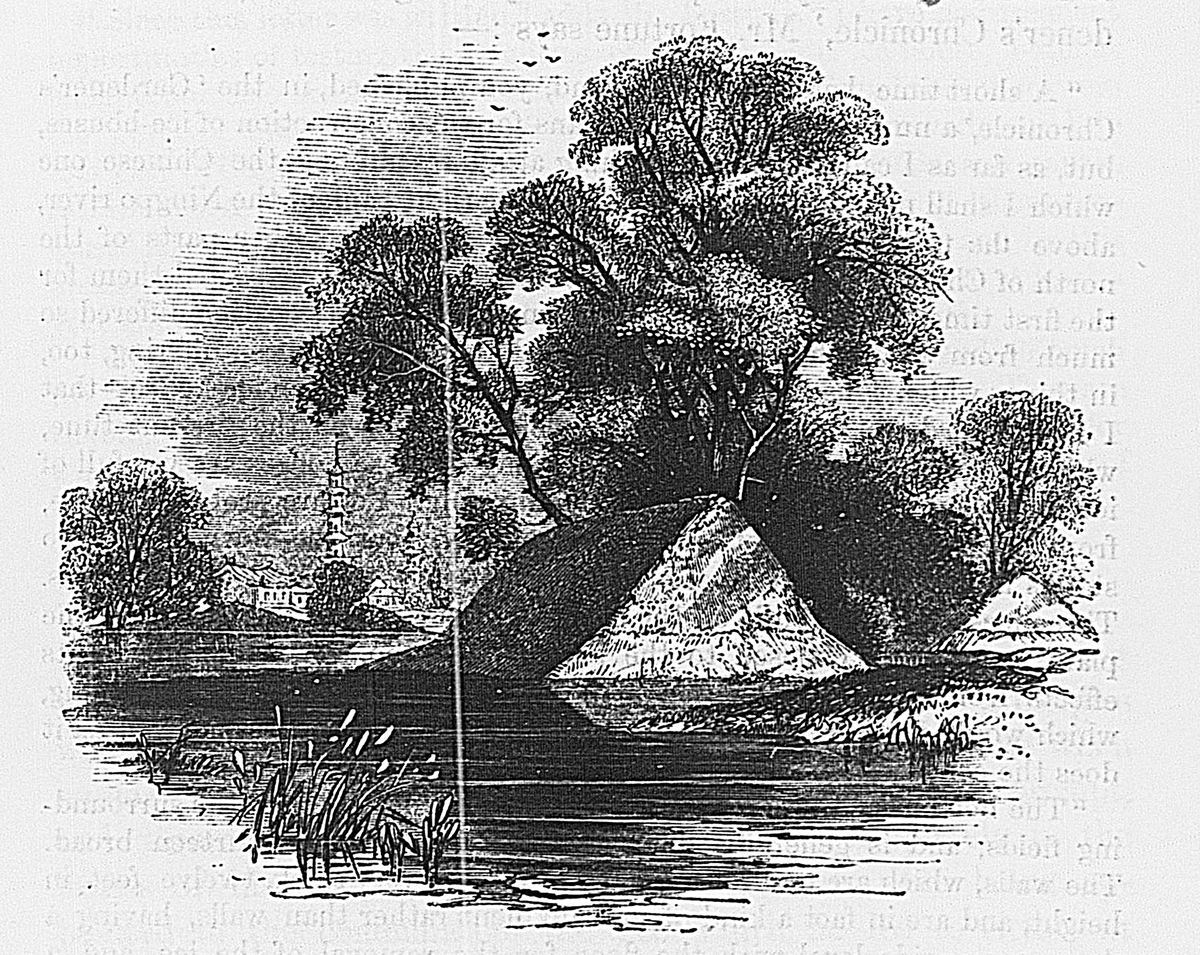
The growing domestic demand for ice further promoted the dissemination of ice-preservation methods to the public, with popular journals drawing on Fortune’s observations. The Home Friend, published by the Society for Promoting Christian Knowledge in London, noted the scarcity of ice in England and suggested that “by following the Chinese plan, every village might have its icehouses” (SEIH 1855: 243–45). Although the accompanying illustration carried an Orientalist inflection, placing the structures in a picturesque landscape with Chinese-style pagodas in the background, it underscored contemporary curiosity about technological adaptation. In the United States, ice consumption became widespread among urban populations by the mid-nineteenth century but remained far less common in rural areas. Godey’s Lady’s Book and Magazine, a Philadelphia-based publication with over 150,000 subscribers by 1860, similarly endorsed the cost-effective Chinese method as particularly suitable for butchers and other country food suppliers (CIH 1855).
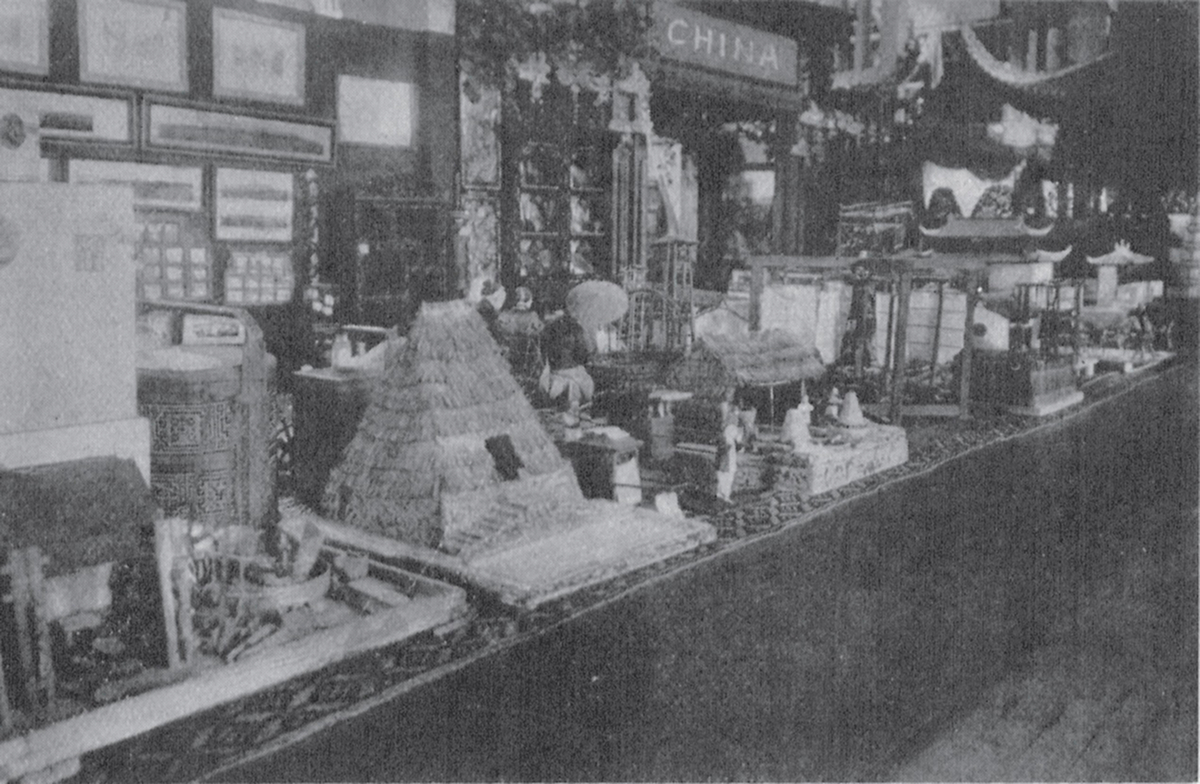
Meanwhile, interest in Ningbo icehouses derived from their crucial logistical role in the fish supply and was further amplified by their visibility at international fairs. As the city hosted China’s largest fish market, a specific Ningbo collection—including an icehouse model—was showcased at fishery exhibitions in Berlin in 1880 as a representation of China’s industrial developments (IGC 1880: 35). Three years later in London, the elaborately decorated Chinese pavilion received extensive media coverage, and the “ingenious details” (CCFE: 6) of Ningbo icehouses were highlighted as advantageous for similar structures in England and America. In the United States, which led the advancement of mechanical refrigeration, the new technology did not displace ice harvesting overnight; direct competition emerged only in the 1880s and persisted for several decades (Rees 2013: 30). The display of an icehouse model alongside other manufacturing facilities at the 1904 Louisiana Purchase Exposition reflected the continued recognition of traditional Chinese practices.
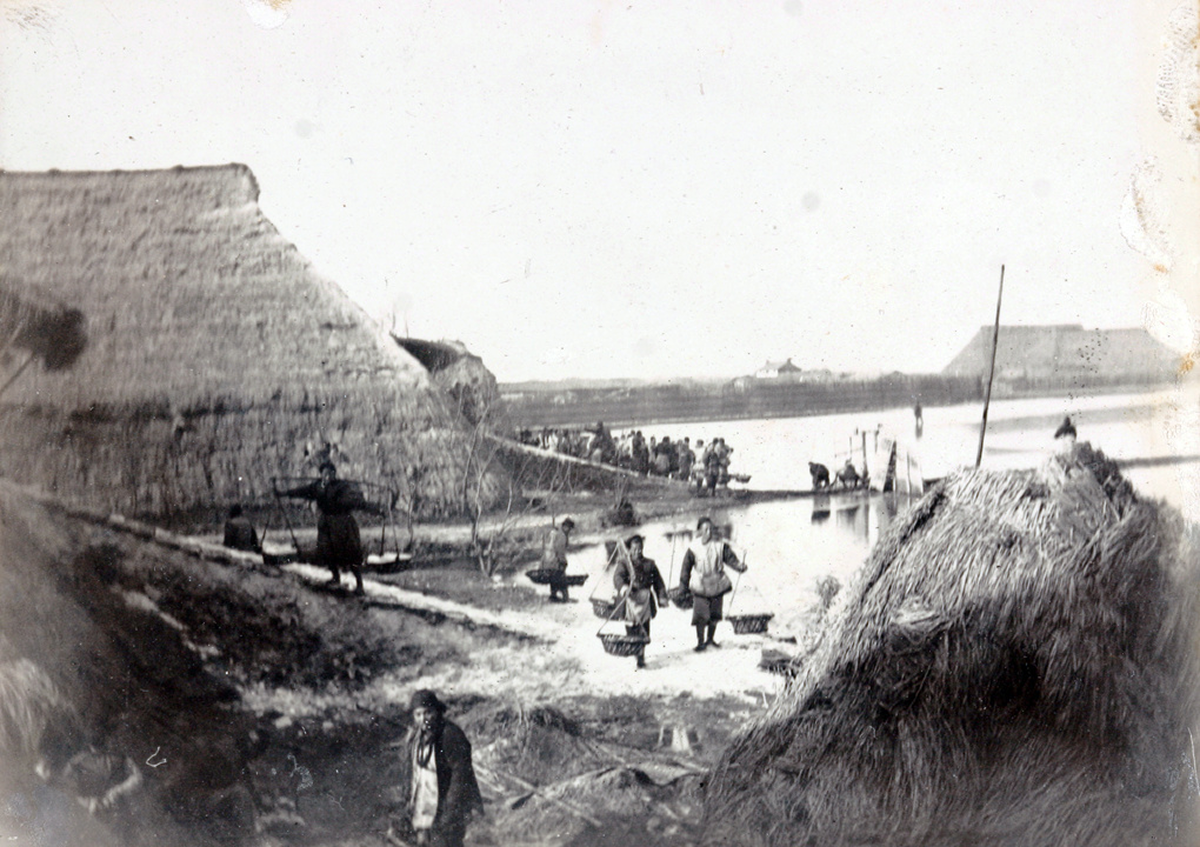
Besides a general interest in China’s environment, culture and society—heightened by opportunities for on-site observation following the country’s mid-nineteenth-century forced opening up—foreign attention towards Ningbo icehouses was largely driven by the practical solutions that these structures offered to meet the expanding need for “cold infrastructure” (Schönach 2018) and to support food systems (Freidberg 2010; Perera 2025). While ice harvesting relied heavily on bodily knowledge and an intimate understanding of local natural conditions (Robichaud 2022), experiences and models from abroad also served as valuable references, as the underlying principles of storage could be adapted across other regions. Within China, ice storage practices varied geographically, yet similar methods were common around Ningbo. According to a survey initiated by the Ministry of Industry in 1933, Yin County contained the largest number of icehouses in Zhejiang Province, providing livelihoods for tens of thousands of people (SGMJ 1933: 479–84). Among the roughly twenty registered plants, each was estimated to hold on average 200–250 tons of ice. This was followed by the provincial capital city Hangzhou and several coastal fishing towns, while only two mechanical ice plants operated in Zhejiang, where their business remained sporadic. Nevertheless, with the growing popularity of artificial cooling, the landscape of icehouses along the Yong River had vanished from public view by the early 1980s, surviving only in place-names such as Bingchanggen 冰厂跟, or ‘site of ice factories’ (BG 2016).
Tracing cryospheric knowledge across scales
Ashutosh, Ishan. 2023. “Frozen modernity: the US–India ice trade and the cultures of colonialism.” Cultural Geographies 30 (3): 413–28.
Beamon, Sylvia P. and Susan Roaf. 1990. The Ice-Houses of Britain. Routledge.
Bennitt, Mark et al. 1905. History of the Louisiana Purchase Exposition. Universal Exposition Publishing Company.
BG, “冰厂跟:承载了十里冰厂的厚重历史.” 2016. 宁波晚报, 27 October.
Boerschmann, Ernst. 1911. Die Baukunst und religiöse Kultur der Chinesen: Einzeldarstellungen auf Grund eigener Aufnahmen während dreijähriger Reisen in China. Band I P'u t'o shan Die heilige Insel der Kuan yin, der Göttin der Barmherzigkeit. De Gruyter.
Carlisle, Arthur Drummond. 1872. Round the World in 1870: An Account of a Brief Tour Made through India, China, Japan, California, and South America. Spottiswoode and Co.
CCFE, “The Chinese Court at the Fisheries Exhibition.” 1883. Morning Post, 13 July.
CIH, “Chinese Ice-House.” 1855. Godey’s Lady’s Book and Magazine 50: 242–43.
Cressey, George Babcock. 1934. China’s Geographic Foundations: A Survey of the Land and Its People. McGraw-Hill.
Dickason, David G. 1991. “The Nineteenth-Century Indo-American Ice Trade: An Hyperborean Epic.” Modern Asian Studies 25 (1): 53–89.
Fortune, Robert. 1845. “Ice-houses in China.” The Gardener’s Chronicle 34: 576.
Freidberg, Susanne. 2010. Fresh: A Perishable History. Harvard University Press.
Hobart, Hi'ilei Julia Kawehipuaakahaopulani. 2022. Cooling the tropics: Ice, indigeneity, and Hawaiian refreshment. Duke University Press.
Huang, H. T. 2000. Science and Civilization in China, vol. VI: Biology and Biological Technology. Part 5: Fermentations and Food Science. Cambridge University Press.
“Ice House.” 1848. American Agriculturist 7 (1): 23–25.
IGC, The Inspector General of Customs. 1880. Special Catalogue of the Chinese Collection of Exhibits for the International Fisheries Exhibitions, Berlin. Statistical Department of the Inspectorate General.
Perera, Meghal. 2025. “Thin Ice.” Roadsides 14: 20-26.
https://doi.org/10.26034/roadsides-202501403
Rees, Jonathan. 2013. Refrigeration nation: A History of Ice, Appliances, and Enterprise in America. Johns Hopkins University Press.
Robichaud, Andrew. 2022. “Frozen Over: Making Ice and Knowing Nature in Nineteenth-Century America.” Environmental History 27 (3): 517–46.
https://doi.org/10.1086/720343
Saeki, Tomi. 1942. “冰廠.” 東洋史研究 7 (4): 219–28.
Schönach, Paula. 2018. “Natural ice and the emerging cryopolis: a historical perspective on urban cold infrastructure.” Culture Machine 17. https://culturemachine.net/vol-17-thermal-objects/natural-ice-and-the-emerging/
SEIH, “Simple and Economical Ice-Houses.” 1855. The Home Friend Vol. III. W. Clowes and Sons.
SGMJ, Shiyebu guoji maoyi ju (ed.). 1933. 中国实业志·浙江省. Hafeng yinshu zhuzi suo.
Surland, Solfrid Klakegg. 2025. “The Power of Ice: Norwegian Cold in Nineteenth-Century Colonial Algeria.” Environmental Humanities 17 (1): 45–64.
https://doi.org/10.1215/22011919-11543415
von Richthofen, Ferdinand. 1907. Ferdinand von Richthofen’s Tagebücher aus China, Band II. Selected and edited by Ernst Tiessen. Dietrich Reimer (Ernst Vohsen).